
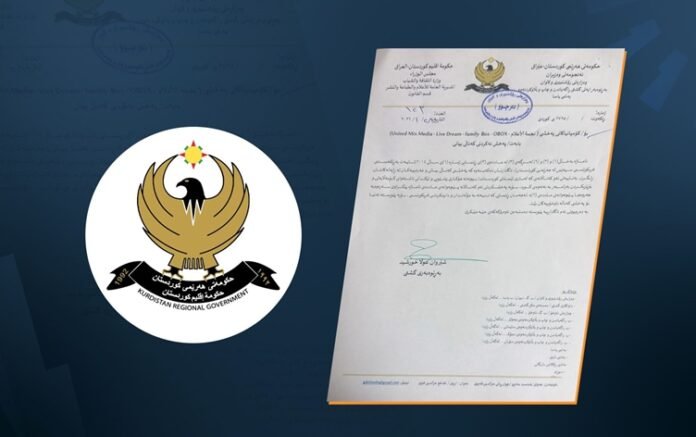
Erbil authorities ordered several broadcasters to stop airing foreign and Arabic television channels. The Kurdistan Region’s culture ministry issued the directive on Wednesday.
According to the ministry, the decision aims to protect social stability. Officials said certain broadcasts fuel chaos during sensitive regional conditions. They also said some channels show disrespect toward the Kurdish nation.
The ministry named several platforms in its written order. These included Najmat al-Aalam, United Mix Media, Live Dream, Family Box, and OBOX. Officials instructed them to limit content to local Kurdish channels.
Furthermore, the ministry warned of legal consequences. It said violations of licensing and frequency rules would trigger immediate action. Therefore, broadcasters must comply without delay.
The order followed a similar move earlier this week. A major Kurdish broadcaster stopped carrying several pan-Arab news channels. That decision came after controversial coverage of events in Western Kurdistan.
Since mid-January, fighting intensified in several Syrian regions. Syrian government forces advanced into areas once controlled by the Syrian Democratic Forces. These areas include parts of Aleppo, Raqqa, and Deir ez-Zor.
As clashes expanded, displacement increased rapidly. International organizations estimate that about 100,000 people fled their homes. Most of the displaced belong to Kurdish communities.
Meanwhile, protests spread across the Kurdistan Region. Thousands gathered to express solidarity with Western Kurdistan. Demonstrators also criticized foreign media narratives.
The culture ministry linked its decision to these developments. Officials argued that misleading coverage deepened tensions. Therefore, they stressed the need for responsible broadcasting.
Broadcasters now face tighter oversight. Many subscribers may lose access to suspended channels. Authorities said the restrictions aim to preserve public order.
Officials emphasized that the decision remains administrative. They said it does not target freedom of expression. Instead, they said it enforces existing media regulations.
The ministry concluded by urging cooperation. It said stability requires unity and caution. As tensions persist, authorities plan continued monitoring.