
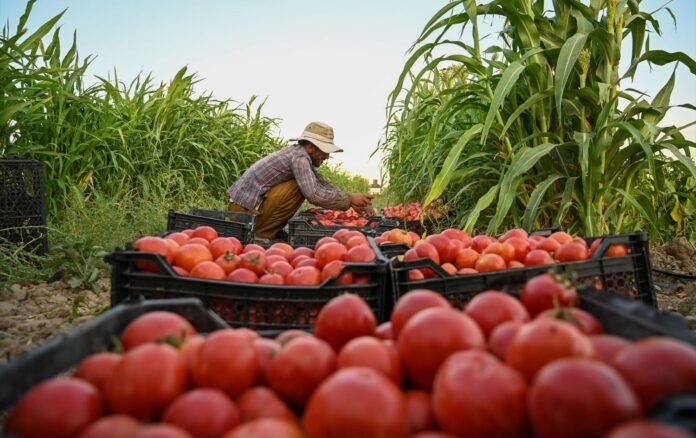
Halabja tomato farmers struggle to sell tomatoes as they face falling prices, rising costs, and competition from cheap imports. This crisis continues to threaten their livelihoods despite an increase in production throughout the region. Halabja farmers struggle to sell tomatoes reflects the ongoing hardship that defines this season.
In Bakraw village, Marwan Irfan planted six dunams of tomatoes. Yet, he earns just 100 dinars per kilogram—barely enough to cover packaging expenses. Irfan explained that local markets don’t even cover crate costs. “Without a stable market, all our spending turns into loss. Bankruptcy is around the corner.”
To avoid crop waste, some farmers have turned to the tomato paste factory in Sharazur. There, prices reach 150 dinars per kilogram, slightly better but still disappointing. Rizgar Jalal recently delivered over two tons of tomatoes to Sulaimani and returned with only 25,000 dinars. “I spent the entire day at the market, hoping to earn 10 dinars more per kilogram. It didn’t help,” he said.
Desperate not to let their produce rot, many take their harvest to the factory. “There’s no other choice. At least the factory takes it,” Jalal added.
The Sharazur facility, launched in 2014 as the first tomato paste factory in the region, processes up to 12 tons of tomatoes per hour. Factory owner Kamaran Mohammed stressed the need for more support. “If we had access to long-term loans or affordable fuel, we could accept more tomatoes. Transportation costs stop us from buying from other areas.”
He explained the factory starts operations at 4 a.m. and offers better rates for high-quality produce. The facility already receives shipments from Kalar, Sharazur, and Erbil, though expansion remains difficult without financial help.
Sattar Mahmoud, Halabja’s director general of agriculture, said tomato production keeps growing every year. Still, farmers continue to face the same challenge: no secure market. He believes that improved export systems and coordinated planning could give farmers better selling opportunities.
Over the years, many Kurdish farmers have destroyed their own crops in protest. With no buyers and prices too low to justify harvest, frustration boils over.
Unless something changes soon, Halabja farmers struggle to sell tomatoes will remain a repeated reality. Without quick action, the region’s hardworking producers will continue to suffer heavy losses.