
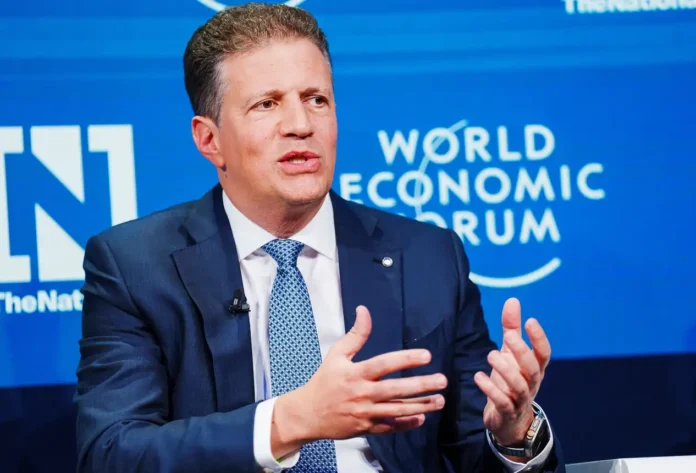
Crescent Petroleum CEO Majid Jafar emphasized the Runaki Project Kurdistan during a high-level panel at the World Economic Forum in Davos. He described the natural gas project as a cornerstone for social stability, economic growth, and reliable 24-hour electricity in the KRG.
Additionally, speaking at the session “Who is winning on energy security?” Jafar said the project leverages local gas reserves to meet domestic energy needs. He explained that the Runaki Project Kurdistan strengthens political, economic, and social stability in the region.
“The project provides 24-hour electricity fully using local natural gas. It is vital for Kurdistan’s stability and resilience,” Jafar said.
He added that projects like Runaki also reduce carbon emissions, aligning the region with global sustainability goals despite ongoing reliance on hydrocarbons.
Therefore, Jafar linked energy security to the soaring demand from artificial intelligence (AI). He warned that digital technologies require massive electricity input. “Creating a single AI-generated video consumes as much electricity as a home in the Middle East for several hours,” he said.
The CEO noted that energy projects like Runaki are crucial to meet the dual challenge of domestic needs and technology-driven demand. He emphasized that energy availability must remain a top priority alongside affordability and sustainability.
Moreover, Jafar highlighted that the Middle East and the United States are currently leading in energy security. He said the region benefits from resource availability, strong policy frameworks, and agile decision-making.
“The Middle East is playing to its strengths through partnerships, not competition,” Jafar said. He pointed out cooperation with U.S., Asian, and tech companies as key to energy sector growth.
Additionally, other panelists, including IEA Executive Director Fatih Birol and Harvard’s Meghan O’Sullivan, stressed similar points. Birol described the world as “entering the age of electricity,” highlighting natural gas’s growing role. O’Sullivan noted U.S. energy policy continuity, benefiting regional actors like Kurdistan.
Additionally, Jafar concluded that the Runaki Project Kurdistan provides a foundation for wider economic development. Reliable energy attracts investment and allows diversification beyond hydrocarbons. He stressed that stability from electricity access enables the Kurdistan Region to compete globally.
Therefore, the panel also highlighted the rising energy demand from electrification and AI. Experts agreed that secure energy supplies are essential for global and regional stability.
For Kurdistan, Jafar said, the Runaki Project Kurdistan ensures the lights stay on, protects social cohesion, and strengthens economic infrastructure.