
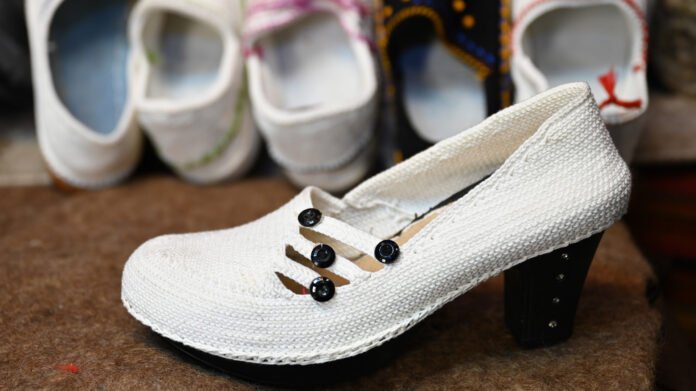
Master artisans across the Hawraman region actively preserve centuries-old techniques for manufacturing traditional Hawramani klash footwear. Today, local cultural specialists and independent researchers highlight the profound economic and historical value of these handcrafted shoes. Consequently, the distinctive white footwear remains an enduring symbol of Kurdish heritage and identity across regional markets.
Historically, village craftsmen designed the shoes specifically to navigate steep mountain slopes and rough terrain. Artisans knit the uppers entirely by hand using heavy cotton thread and compressed layers of fabric for the soles. Interestingly, a new pair initially lacks fixed left or right shapes until regular wear naturally molds them.
Production historically required specialized collaboration among multiple community members and individual family households. Typically, local women knitted the outer cotton uppers, while skilled men constructed the compressed fabric soles. Master artisan Wasta Abubakr Tawellayi later modernized production methods by introducing reinforced soles and specialized silk threading.
Contemporary artisans face rising material costs, shifting market trends, and declining numbers of younger apprentices. Economic experts note that high manual labor requirements make mass commercialization difficult for traditional workshops. Furthermore, imported industrial imitations increasingly threaten authentic handmade production across local retail markets.
To protect this heritage, regional cultural institutions now organize targeted workshops and educational apprenticeships for young people. Universities actively record oral histories and technical processes to archive specialized artisanal knowledge for future generations. Additionally, growing demand among diaspora communities provides vital international market opportunities for small manufacturing businesses.
Hawramani klash footwear represents a living bridge between historical rural necessity and modern Kurdish identity. Preserving this unique craft ensures that traditional knowledge survives alongside evolving economic and cultural landscapes. Therefore, continued investment in local artisan networks will help maintain this iconic regional tradition for decades to come.