
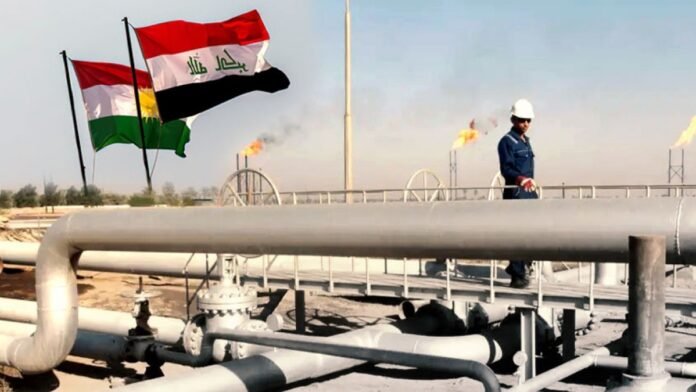
Iraq has signaled progress in the long-running dispute over oil management with the emergence of a new understanding involving three parties. As a result, officials expressed optimism about resolving one of the country’s most complicated economic issues.
Salim al-Rukabi, spokesperson for the federal Ministry of Oil, announced that discussions had produced encouraging results. Moreover, he stated that representatives involved in the negotiations had reached a promising framework to manage the oil file. Therefore, expectations for a final settlement have grown stronger.
The Kurdistan oil agreement stood at the center of these discussions. In addition, officials described the latest developments as a positive step toward ending years of disagreements over exports and revenue management. Consequently, hopes have risen for a more stable relationship between Erbil and Baghdad.
According to al-Rukabi, the negotiations produced what he called a “very good tripartite agreement” to address the issue. Furthermore, the arrangement aims to establish practical mechanisms that satisfy the interests of all participating sides. As a result, the talks have entered a more constructive phase.
The Kurdistan oil agreement could open the door to resuming smoother cooperation in the energy sector. Moreover, a comprehensive understanding may help restore confidence among investors and energy companies operating in the region. Therefore, economic stakeholders continue to monitor developments closely.
For years, disagreements over oil exports and administrative authority created tensions between Erbil and Baghdad. In addition, these disputes affected energy operations and delayed broader economic solutions. Consequently, many observers have viewed a negotiated settlement as an essential priority.
Officials involved in the process stressed the importance of dialogue and compromise. Furthermore, they emphasized that practical solutions can produce outcomes that benefit citizens and support national interests. As a result, the latest progress has generated cautious optimism.
The Kurdistan oil agreement also carries broader economic significance. In addition, greater coordination in the energy sector can strengthen public finances and improve planning for future development projects. Consequently, resolving the dispute could support long-term economic stability.
Observers believe the emerging framework reflects a growing willingness to address outstanding issues through negotiation. Moreover, sustained communication between all parties can reduce misunderstandings and encourage mutual trust. Therefore, maintaining momentum remains critical.
While officials have not disclosed every detail of the proposed arrangement, they continue to describe the atmosphere of the talks as positive. Furthermore, additional discussions may focus on technical procedures and implementation mechanisms. As a result, all sides appear committed to reaching a lasting resolution.
The Kurdistan oil agreement represents more than an energy understanding. In addition, it symbolizes a potential breakthrough in relations between Erbil and Baghdad after years of complex negotiations. Consequently, successful implementation could mark a turning point in managing one of the country’s most sensitive files.