
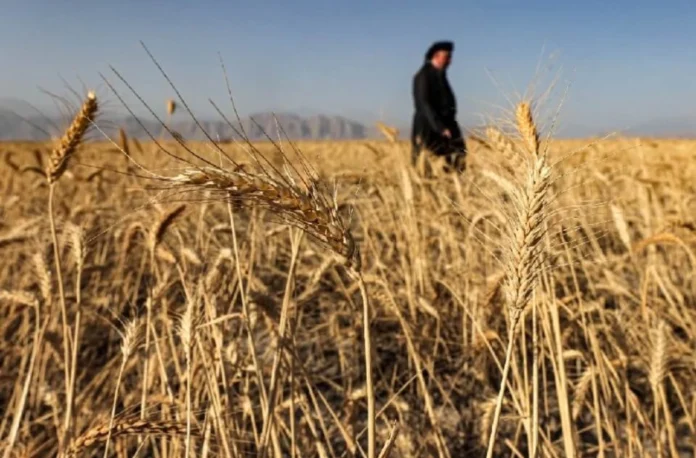
Combine harvesters churn rhythmically across the sunbaked lands of Kirkuk province. Meanwhile, heavy trucks roll toward government silos. This activity marks the end of the agricultural year. However, a deep bureaucratic divide disrupts the region. Farmers cultivate the exact same wheat crop. Yet, an unfair two-tiered payment system dictates their survival today.
The state prices grain based on a single administrative distinction. If the state includes a plot in its plan, the farmer thrives. Otherwise, the family faces immediate financial disaster. This policy directly hurts thousands of local families. Furthermore, the system exposes unresolved legal issues within Iraq.
The federal Ministry of Trade opened its facilities on June first. Consequently, officials accepted over 250,000 tons of high-quality grain. The government pays a subsidized rate of 700,000 dinars per ton. Nevertheless, a massive segment of local growers cannot access this lucrative price.
Arab cultivators in districts like Hawija secure full state benefits. In contrast, Kurdish and Turkmen growers face systematic exclusion. These farmers live in villages like Topzawa and Sargaran. This exclusion affects a massive amount of grain. In fact, Kurdish farmers produce nearly half of the province’s annual yield.
Widespread protests eventually forced a government response. Therefore, the Ministry of Trade offered a new compromise. Silos now accept grain from outside the official plan. However, this concession inflicts a brutal financial penalty. The government pays only 500,000 dinars per ton for this crop.
This low rate slashes gross revenue by twenty-nine percent. As a result, farmers lose 200,000 dinars on every single ton. Consequently, many cultivators completely abandon the state silos. Instead, they turn to the volatile private market. Private traders buy wheat for 350,000 to 450,000 dinars. Although merchants pay less, they offer immediate cash. Thus, farmers bypass the slow federal check system.
This ongoing economic crisis stems from old political choices. In January 2025, the Iraqi Parliament annulled these historic decrees. This vote supposedly restored ancestral fields to their rightful owners. Sadly, the executive branch still delays real enforcement. Bureaucrats still exclude these fields from national quotas. Farmer representative Mohammed Amin highlights the vast scale of this problem. Over 800,000 dunams of fertile land remain outside the state system.
The government fails to execute helpful past legislation. Recently, officials issued directives for only forty-seven villages. Meanwhile, three hundred villages receive absolutely no help. These agricultural families endure constant regional conflicts. Now, unfair state pricing threatens their survival once again. The state must change its flawed framework immediately. Otherwise, Iraq will suppress its own agricultural future.