
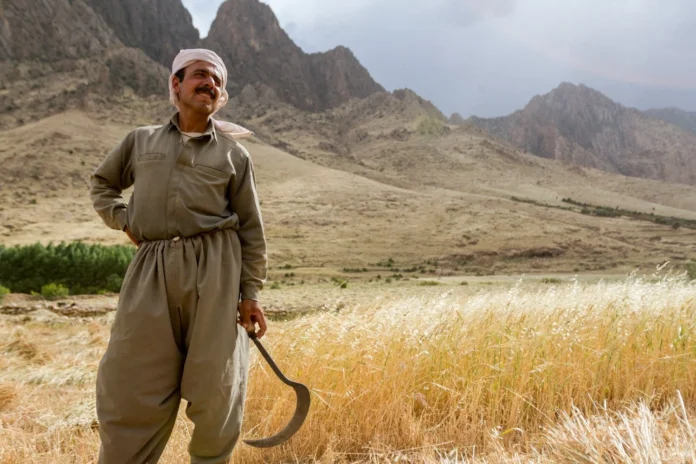
Twenty Kurdish farmers from Tapa Sawz village appeared before a local Iraqi court. Relocated Arab settlers filed lawsuits claiming ownership of farmland currently cultivated by the local residents. Furthermore, the plaintiffs alleged that physical altercations occurred during recent confrontations over access to the fields. Consequently, the Kurdish farmers must respond to these serious allegations through judicial proceedings.
This legal dispute reflects decades-old tensions over agricultural land across several rural provinces. Specifically, Iraq’s former Ba’ath regime confiscated large areas of farmland from local Kurdish and Turkmen owners. Under Arabization policies, government authorities redistributed these lands to Arab families through official contracts. Therefore, competing historical claims and government-issued documents continue to fuel intense disputes in courtrooms.
Similar legal proceedings involve other local community leaders across neighboring agricultural districts. For example, farmer representative Mohammed Amin faces two separate lawsuits related to previous land disputes. Amin has publicly rejected all allegations and claims that video evidence supports his position. Furthermore, he has questioned changes in court venues, which he says have caused lengthy delays in his legal defense.
Severe security challenges have added to the legal concerns facing local rural workers. Recently, gunmen killed Kurdish farmer Sattar Jabbar while he was pursuing individuals accused of stealing his wheat. Jabbar had repeatedly requested protection from local security forces against agricultural theft before his death. Later, security officials identified several suspects and pledged to pursue justice through legal channels.
Court proceedings have become a major battleground for protecting local agricultural livelihoods. Farmers continue to navigate overlapping legal claims deeply connected to Iraq’s modern political history. Consequently, rural communities are closely monitoring judicial decisions to assess long-term stability and fairness. Overall, resolving these complex property disputes remains essential for promoting peaceful coexistence across agricultural regions.