
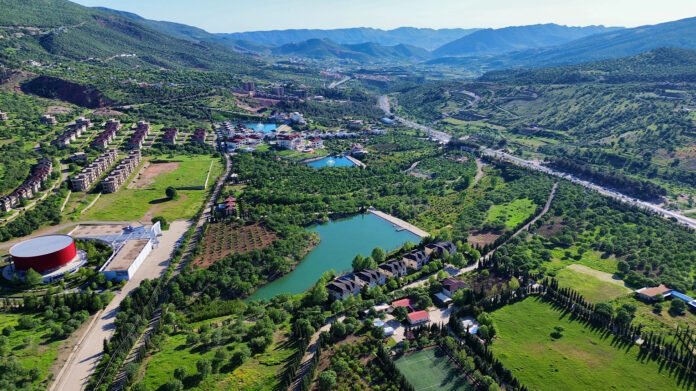
The Kurdistan Region has expanded its green areas as the Kurdistan Regional Government (KRG) speeds up environmental reforms. As a result, officials say coordinated infrastructure projects, stricter industrial rules, and large-scale planting programs have increased green space by about 6 percent. Meanwhile, the Ninth Cabinet has placed environmental protection at the center of its policy agenda.
Environmental authorities say the region is entering a “positive transitional phase,” although economic pressures remain. Dr. Sanaan Abdullah from the Kurdistan Region Environmental Board said the government applies a multi-layered strategy.
It focuses on reducing emissions, fighting desertification, and improving air quality in major cities. The “Runaki” project removes diesel-powered neighborhood generators. Consequently, officials report a clear drop in urban pollution levels.
Green coverage across the region now stands at about 20 percent. In Erbil, officials expect it to exceed 25 percent after completing the green belt project. Moreover, new residential and industrial projects must allocate 25 percent of their land to green space.
Sulaymaniyah records 22–23 percent green coverage, while Duhok stands at 20–22 percent and Halabja remains slightly below 20 percent. Therefore, authorities use these figures to guide future planting efforts. The Runaki project has shut down 2,500 generators so far. Furthermore, it aims to close 7,000 by 2026. Officials say the closures prevent about 1.1 million tons of CO2 emissions annually and improve air quality.
Erbil has also exited global polluted city rankings. Air quality now ranges between “healthy” and “moderate.” To support this, authorities installed monitoring stations across the city. The Erbil Green Belt, launched in 2025, will stretch 78 kilometers and include millions of trees. Accordingly, it is expected to absorb large amounts of carbon, reduce heat, and create jobs.
At the same time, authorities have shut down 85 illegal refineries and tightened environmental rules for remaining facilities. Meanwhile, the government promotes electric and hybrid vehicles to reduce emissions.
Overall, officials say environmental protection now plays a central role in long-term development planning across the Kurdistan Region.