
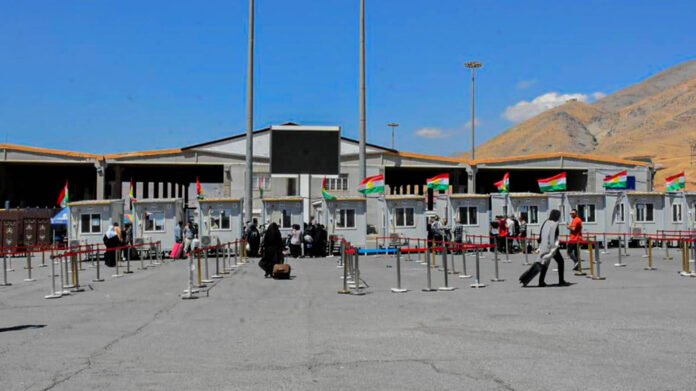
The Kurdistan Region facilitated the passage of around 100,000 Arbaeen visitors from five countries during this year’s pilgrimage.
The visitors traveled through the Haji Omeran International Border Crossing toward Najaf and Karbala. The operation ran from July 15 until August 6, according to regional authorities.
Pilgrims from Iran, Türkiye, Azerbaijan, Georgia, and Russia used the Kurdistan Region route. Meanwhile, government institutions coordinated transportation, security, health, and reception services throughout the operation.
Four reception stations operated at Haji Omeran, Kani Maran, Erbil International Fairground, and Sherawa checkpoint. These stations provided food, water, accommodation supplies, internet, cooling systems, and hygiene facilities.
The Barzani Charity Foundation managed essential supplies at the reception stations. It provided meals, hot drinks, tents, blankets, bedding, medical supplies, and other necessities.
Furthermore, the regional government covered transportation costs for visitors traveling toward their destinations. Authorities deployed around 3,500 buses and minibuses for outbound and return journeys.
Many pilgrims also received free transportation between Erbil, Najaf, and Karbala. Consequently, the arrangements reduced travel costs and supported smoother movement along major routes.
Security and emergency services operated across the main transportation corridors. Authorities established 38 fixed centers and deployed 17 emergency response teams.
Additionally, 21 government institutions and specialized units provided services around the clock. These included passport, customs, traffic, security, civil defense, foreign relations, and health authorities.
At Haji Omeran, authorities deployed 59 computers to accelerate passport processing. Meanwhile, health centers along the route operated continuously throughout the pilgrimage period.
Medical teams provided treatment and basic health services to 2,525 visitors. Despite the large number of travelers, officials recorded only six minor civil defense incidents.
Authorities also reported one traffic accident during the operation. However, no fatalities occurred during any of the reported incidents.
Prime Minister Masrour Barzani directed government transportation support and broader preparations. Meanwhile, officials praised workers, security personnel, institutions, and volunteers involved.
The Barzani Charity Foundation has supported the operation for five consecutive years. Its involvement has helped reduce pressure on government resources and logistical services.
Overall, the operation demonstrated the Region’s ability to manage large-scale cross-border travel. It also strengthened Kurdistan’s role as a major transit route for Arbaeen visitors.