
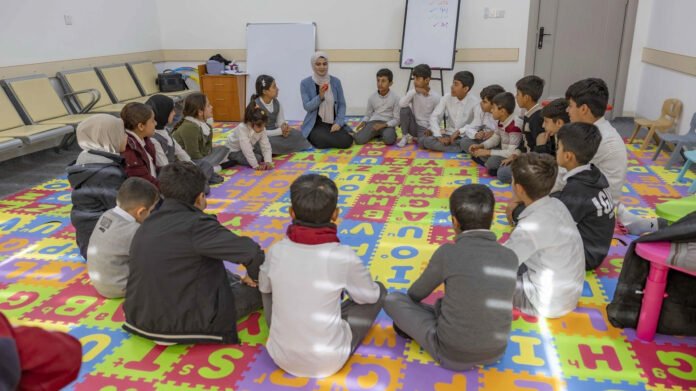
The Kurdistan Region currently faces a massive, structural humanitarian crisis. Over 854,000 displaced individuals live within its borders. Local authorities manage this burden without sufficient support from the federal government in Baghdad.
The Joint Crisis Coordination Centre (JCC) recently released these comprehensive demographic figures to the public. Ali Saeed, the JCC’s Director of Data and Information, broke down the specific numbers during an interview. Currently, the region hosts 285,000 refugees from neighboring countries. Additionally, 571,000 internally displaced persons (IDPs) live there after fleeing terrorism within Iraq. Consequently, this massive population severely stretches local administrative capacities and financial resources every single day.
This demographic reality also fuels long-simmering political friction between regional and federal leaders. Specifically, Saeed heavily criticized the Iraqi Ministry of Migration and Displacement for its lack of action. He claimed the federal ministry completely neglects its institutional responsibilities toward these vulnerable groups. Furthermore, he noted that meaningful federal assistance never materialized despite multiple pleas. Therefore, the Kurdistan Regional Government (KRG) bears the entire logistics weight alone.
To cope with the financial strain, the KRG relies heavily on the United Nations High Commissioner for Refugees (UNHCR). This essential partnership bridges the massive budget gaps left by Baghdad’s absence. Meanwhile, local leaders used World Refugee Day to emphasize their ongoing struggle to the international community. Kurdistan Region Interior Minister Reber Ahmed provided a broader historical context during his public address. He stated that the region previously sheltered over 2.5 million displaced people during peak conflict years.
The current situation remains entirely unsustainable without immediate international intervention. Local resources are running incredibly thin. Meanwhile, the political gridlock between Erbil and Baghdad worsens the daily lives of these vulnerable populations. Both refugees and IDPs face an uncertain future. They remain stuck in a political stalemate while waiting for real solutions.