
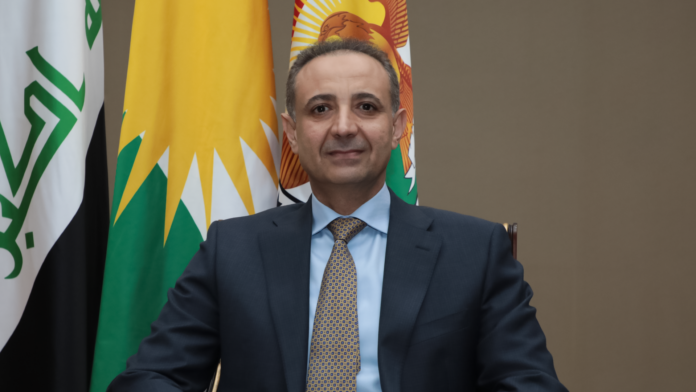
The Kurdistan Region president currently focuses on political stability during his important diplomatic visit to Iran. Therefore, his spokesperson emphasized this balanced approach to regional foreign policy on Friday. The administration strongly believes in maintaining steady relationships with all neighboring countries. Consequently, Kurdish leadership aims to strengthen these critical ties through ongoing dialogue.
President Nechirvan Barzani met with top Iranian leaders on Friday afternoon. The officials discussed Iraq-Iran relations and other pressing regional security issues. Furthermore, President Barzani attended the official funeral of Iran’s late Supreme Leader Ali Khamenei. Other prominent Kurdish officials also joined the mourning ceremony in Tehran. This event coincided with critical peace negotiations between Washington and Tehran. These diplomatic talks followed the recent, intense Iran-US military conflict.
Previously, a joint US-Israeli aerial campaign launched massive strikes against Iran on February 28. The sudden bombardment eliminated several top Iranian leaders and military commanders. In fact, the initial strikes killed Supreme Leader Khamenei on the very first day. Subsequently, the ongoing war and intermittent military escalations delayed the official funeral ceremony for months. However, both nations recently reduced hostilities to allow for these diplomatic proceedings.
During his trip, Barzani held productive talks with Iranian President Masoud Pezeshkian. He also conversed with Iranian Foreign Minister Abbas Araghchi regarding bilateral cooperation. Specifically, the leaders reviewed the newly implemented ceasefire agreement. This truce followed a crucial Memorandum of Understanding in mid-June. As a result, both sides now hope for long-term regional stability and peace.
The spokesperson highlighted Barzani’s consistent adherence to strict neutrality. The Kurdish president firmly opposes war and always prefers peaceful mediation. He strongly believes that open diplomacy, rather than violent conflict, resolves complex crises. Accordingly, Barzani reiterated his full support for the current Iran-US negotiations. Regional stakeholders highly value this balanced stance during these turbulent times.
Finally, the warm reception by Iranian leaders highlights the high stature of the Kurdistan Region. This interaction underscores the strategic importance of the presidency on the international stage. Both governments expect deeper cooperation and fewer border tensions in the near future. Thus, this historic visit marks a vital step toward sustainable Middle Eastern peace.