
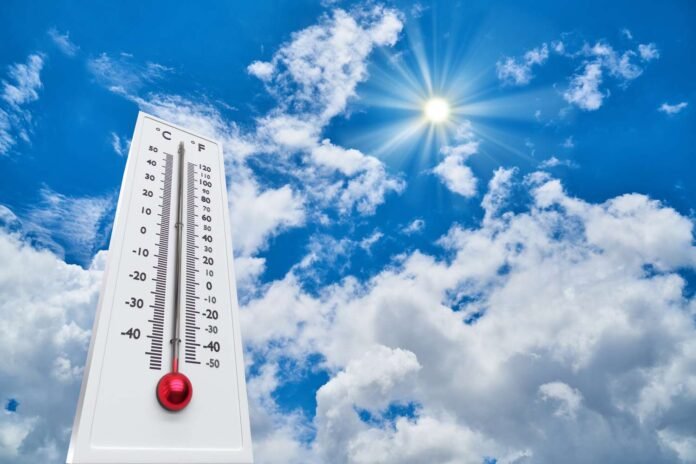
Meteorological authorities expect temperatures across the Kurdistan Region to gradually decline following recent severe heatwaves. Official forecasts confirm that regional weather conditions will improve as cooler air currents sweep across northern territories. Consequently, this anticipated meteorological shift marks the end of the extreme summer heat across the region.
Regional weather offices reported an initial, minor temperature decline across most northern governorates on Monday. Furthermore, meteorologists project a much larger temperature drop of up to five degrees Celsius by late August.
Active westerly winds will simultaneously blow across flat terrain over the coming days. These strengthening winds will likely generate light dust storms across central and southern agricultural areas. As temperatures decrease further later this month, dust concentrations may temporarily increase across the region.
Local weather expert Dr. Luqman Mufti noted that severe summer temperatures are not expected to return this season. Meanwhile, high temperatures will persist temporarily in some areas, reaching 47 degrees Celsius in southern Garmiyan border areas.
Temperatures elsewhere in the region will remain elevated, with Erbil expecting 42 degrees and Sulaimani reaching 41 degrees Celsius. Additional forecasts indicate temperatures of 41 degrees in Duhok, 43 degrees in Halabja, and 43 degrees in Zakho. Higher mountain areas will experience milder conditions, with Haji Omeran expecting highs of around 35 degrees Celsius.
However, meteorologist Shalaw Hidayat confirmed that incoming cool air masses will soon replace the oppressive heat. The seasonal Indian Ocean low-pressure system will gradually recede from northern airspace over the coming week.
The retreat of this low-pressure system will remove a primary driver behind recurring seasonal heatwaves across the region. Thus, local populations can anticipate significantly cooler conditions as the region moves toward early autumn. Reduced thermal stress will lower energy demand while improving outdoor conditions throughout urban centers. In conclusion, regional weather patterns are transitioning toward more stable atmospheric conditions, effectively bringing the Kurdistan Region’s summer heatwave to an end.