
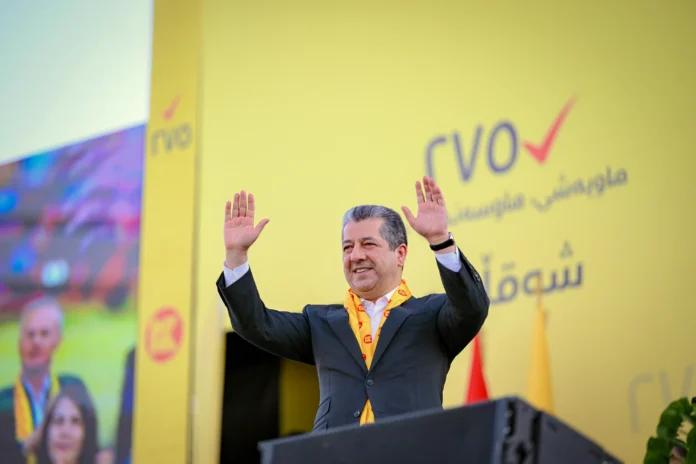
Kurdistan Democratic Party Deputy President Masrour Barzani issued a major address marking eighty years of institutional operations today. He praised historical sacrifices while highlighting the continuous role of the leadership in preserving regional stability. Furthermore, he described the founding occasion as a pivotal milestone across modern regional history. This milestone coincides with ongoing administrative efforts to strengthen governance structures across northern Iraq today. Observers consider the address a clear endorsement of institutional continuity and strategic governance goals.
The organization emerged eight decades ago under the leadership of Mustafa Barzani to represent public rights. Over past decades, the political entity expanded into a dominant administrative force across Erbil. Today, party leaders direct key regional executive institutions and advance comprehensive socio-economic development initiatives. Consequently, annual declarations shape political discourse regarding government policy and regional security management.
In his detailed statement, Masrour Barzani commended historical fighters and families of fallen regional security forces. Additionally, he emphasized that party operations provide a firm foundation for constitutional protection and economic progress. Maintaining peaceful coexistence among diverse religious groups remains a central priority for regional stability. Moreover, analysts note that internal cohesion directly influences ongoing infrastructure programs and public investment projects. Therefore, political leaders urge regional factions to maintain constructive dialogue and administrative cooperation.
Beyond internal political affairs, the deputy president connected contemporary governance programs to historic institutional objectives. He noted that modern infrastructure projects fulfill long-term strategic plans established by earlier generations. Furthermore, administrative teams plan to expand public service delivery initiatives in the coming months. Consequently, regional government officials intend to finalize key developmental policies across local municipalities.
Barzani concluded his speech by reaffirming total commitment to public service and regional defense. He thanked loyal supporters whose persistent efforts sustained organizational vitality through previous economic difficulties. Looking forward, regional leaders plan to build resilient cabinet frameworks while managing broader geopolitical developments. Political observers expect the organization to leverage this milestone to reinforce institutional unity. Ultimately, regional officials aim to drive economic modernization while defending constitutional rights consistently.