
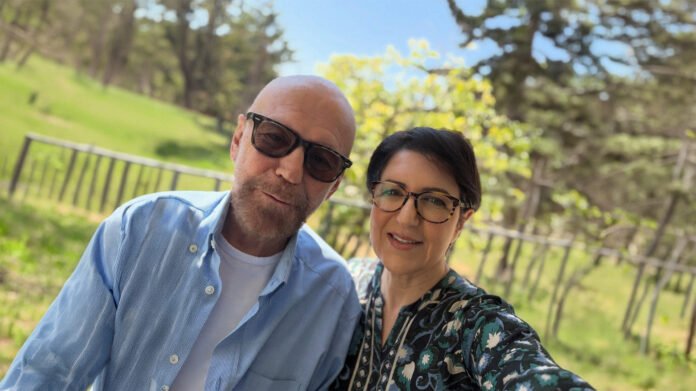
Veteran Kurdish actor and director Mozaffar Shafeie has died at 70 after battling pancreatic cancer. His death marks the loss of an influential figure in Kurdish theatre and cultural life.
Shafeie died peacefully in Ankara on Tuesday, surrounded by his family. Born in Mahabad on April 26, 1956, he developed an early passion for acting and theatre.
He later studied theatre in London and graduated from Dartington College of Arts in 1982. His career eventually covered theatre, television, film, radio, broadcasting, and cultural activism.
In 1986, Shafeie helped establish a Kurdish cultural center in London. Through the institution, he promoted Kurdish theatre, arts, festivals, and cultural programs among diaspora communities.
Meanwhile, he spent three decades working as a broadcaster, translator, and presenter. Despite his broadcasting career, acting and directing remained central to his professional life.
In 1990, Shafeie became the first Kurdish actor to perform at Britain’s Royal National Theatre. The achievement represented an important milestone for Kurdish artists working internationally.
His acting career included several international television and film productions. He also gained recognition among Persian-speaking audiences for voicing a well-known British television presenter.
Furthermore, Shafeie expanded his cultural activities to Japan, where he worked with international broadcasters. He later founded a theatre company in Tokyo and promoted diverse theatrical traditions.
After leaving Washington in 2023, Shafeie settled in Erbil with his family. He hoped to contribute to developing a national theatre reflecting Kurdistan’s artistic heritage.
Shafeie was married to Kurdish journalist Bayan Sami Abdul Rahman, and they had a son, Ramyar. His family said he received treatment after his cancer diagnosis in December 2025.
However, his condition worsened after the cancer returned in July 2026. His family later thanked regional officials and medical teams for supporting him during treatment.
Shafeie connected Kurdish culture with audiences across Britain, Japan, Europe, and the wider region. Consequently, his influence extended beyond acting into broadcasting, cultural advocacy, and international artistic cooperation.
His death leaves a significant gap in Kurdish cultural life. Nevertheless, his decades of artistic work continue providing an important legacy for future Kurdish artists.