
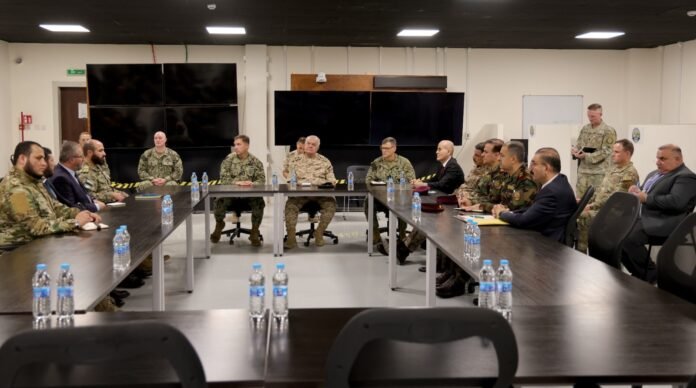
Senior Peshmerga officials joined military leaders from Iraq, Jordan, Syria, and the United States in Amman Tuesday. The meeting focused on border security, intelligence sharing, military cooperation, and coordinated responses to regional security threats.
Kurdistan Region Minister of Peshmerga Affairs Shorsh Ismail and Peshmerga Chief of Staff Lieutenant General Issa Ozeir represented the Kurdistan Region. Meanwhile, senior military officials from the participating countries discussed ways to strengthen regional coordination.
The Jordanian Armed Forces hosted the meeting in Amman. In addition, the gathering included the Iraqi Army Chief of Staff, Jordanian Joint Chiefs of Staff Chairman, Syrian Army Chief of Staff, and U.S. Central Command commander.
Participants discussed the changing security situation across the Middle East. Furthermore, they examined border threats and risks affecting regional stability and national security.
Border protection remained a major focus during the discussions. Therefore, military officials explored stronger coordination and improved systems for sharing security information.
The participants also discussed exchanging military expertise and operational experience. Consequently, greater cooperation could improve the readiness of participating forces against current and future threats.
Peshmerga officials emphasized the importance of coordinated regional security efforts. They stressed that stronger communication between military institutions could improve responses to cross-border threats.
Moreover, participants called for expanded military relations and closer cooperation. They highlighted the need to protect borders while maintaining national sovereignty and regional stability.
The meeting also examined opportunities to strengthen existing military partnerships. Additionally, officials discussed intelligence sharing, operational readiness, and joint responses to emerging security challenges.
The participation of Peshmerga leaders highlighted the Kurdistan Region’s role in regional security cooperation. It also demonstrated the importance of coordination between Erbil, Baghdad, and neighboring countries.
Meanwhile, Iraq’s Defense Ministry said the meeting aimed to strengthen military relations among participating sides. Officials also emphasized information sharing and improved capabilities for future security challenges.
On the sidelines, the Iraqi Army Chief of Staff met with the U.S. Central Command commander. Their discussions covered military cooperation, regional developments, and efforts supporting security and stability.
The Amman meeting comes as regional security conditions continue to change. Therefore, stronger military coordination could become increasingly important for addressing cross-border threats.
For the Kurdistan Region, closer cooperation could strengthen border protection and improve coordination with neighboring security institutions. Going forward, participants could expand information-sharing mechanisms and develop stronger frameworks for joint preparedness.