
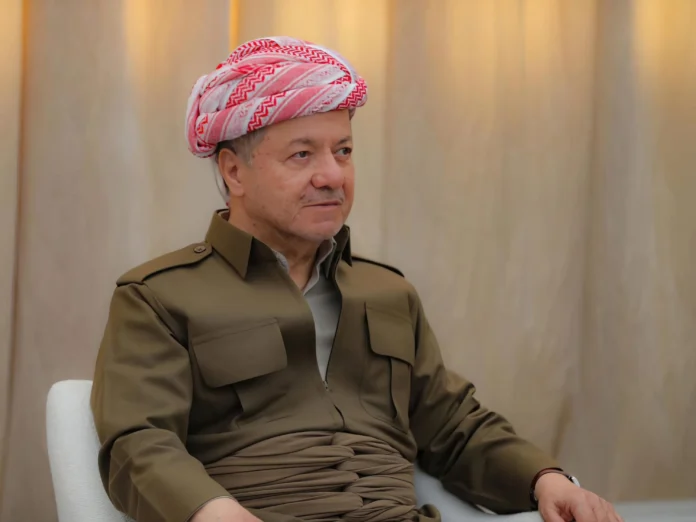
President Masoud Barzani marked the 38th anniversary of the Badinan Anfal campaign on Tuesday with an official statement. He strongly condemned the historic atrocities committed by the former Iraqi regime across northern Kurdistan. Barzani also called on Baghdad to fulfill its legal obligations by providing compensation directly to the families of survivors and victims. The solemn commemoration highlights the ongoing demands for historical justice, constitutional rights, and financial restitution.
In his statement, Barzani recalled the brutal military offensive carried out between August 25 and September 6, 1988. During the campaign, Iraqi forces used chemical weapons, carried out mass detentions, and forcibly displaced thousands of Kurdish residents. The scorched-earth strategy also sought to alter the region’s demographics while destroying hundreds of villages and agricultural communities. Barzani emphasized that the Kurdish people’s determination ultimately defeated the oppressive objectives of the Baathist regime.
The Badinan operations represented the final devastating phase of the broader 1988 Anfal genocidal campaign. Historians estimate that more than 182,000 Kurds were killed during the campaign and that thousands of rural communities were destroyed. Chemical attacks also targeted populated areas, most notoriously during the March 1988 attack on Halabja. Kurdish leaders and survivors regard these coordinated operations as part of a systematic effort to destroy Kurdish communities and identity.
Barzani stressed that the central government in Baghdad must address the long-term consequences of these state crimes. The Supreme Iraqi Criminal Tribunal officially classified the Anfal campaign as genocide and a crime against humanity. Nevertheless, survivors and victims’ families continue to demand comprehensive federal reparations, as well as targeted economic development for the affected northern regions. Sustained efforts will focus on securing further international recognition of the Anfal genocide, documenting its victims, and locating the remains of those who remain missing.