
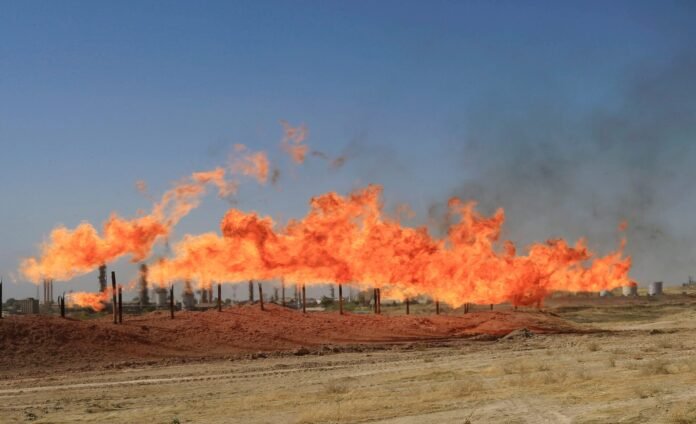
BP has resumed operations at oil fields and facilities operated by the North Oil Company after a suspension that lasted more than a month.
The company had withdrawn its technical teams because of regional security tensions linked to the conflict involving the United States, Israel, and Iran. However, officials confirmed that BP restarted operations at the end of last week.
Mohammed Samaan welcomed the company’s return and stressed the importance of foreign investment in Kirkuk’s energy sector.
“From our first day in office, we emphasized that BP should continue operating in Kirkuk,” Samaan said. He added that local authorities will provide support to help foreign companies continue their work in the province.
According to Samaan, foreign energy projects can strengthen Kirkuk’s economy and create development opportunities. He also revealed that he recently discussed the issue during a visit to the British Embassy in Baghdad.
Furthermore, Kirkuk officials plan to hold meetings with BP representatives in the near future. Authorities are also trying to attract a Turkish energy company to cooperate with BP on future projects.
BP signed a 20-year contract with Iraq’s Oil Ministry. Although the agreement began about a year ago, the company has mainly focused on technical studies, consultation, and data collection.
Meanwhile, Sirwan Mustafa criticized the technology currently used in the oil fields. He said BP wants to increase production but still relies on older extraction methods.
Mustafa explained that horizontal drilling technology could significantly improve oil production. He added that BP already owns the technology but has not yet used it in Kirkuk.
Current oil production in Kirkuk stands at nearly 350,000 barrels per day. BP plans to increase production to 600,000 barrels per day during the first phase of development.
In the future, officials hope production will eventually exceed one million barrels per day. They believe the expansion could strengthen Iraq’s energy sector and support Kirkuk’s economy.