
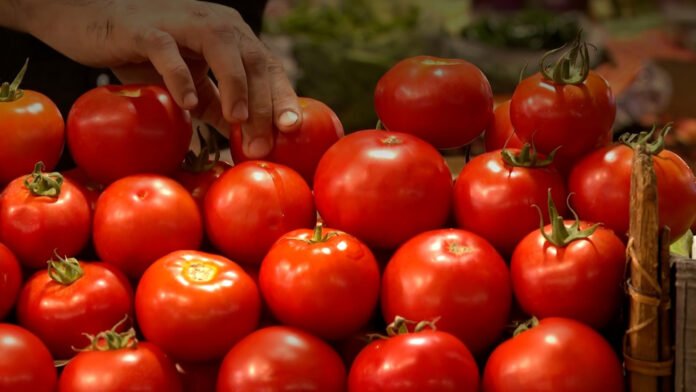
Tomato farmers in Duhok recently reported a major economic turnaround. A new ban on tomato imports into Iraq and the Kurdistan Region has dramatically transformed market conditions. Local producers now enjoy a thriving market for their homegrown produce. Furthermore, agricultural officials describe this timely protectionist policy as a golden opportunity. The decision strongly aims to revitalize domestic farming and enhance the wider national economy.
The Kurdistan Regional Government and the Iraqi federal government jointly implemented this temporary suspension. They designed the restriction to defend regional agriculture from foreign competition. Consequently, farming activity has rapidly intensified across the entire Duhok province.
This smart regulatory measure allows domestic tomatoes to secure far better prices in the open marketplace. Because of this change, suppliers now ship hundreds of tons of fresh tomatoes daily. These shipments travel directly to major central and southern Iraqi provinces.
Local growers explain that successful tomato cultivation demands substantial upfront investment. Farmers spend significant capital on quality fertilizers, specialized pesticides, and intense manual labor. Therefore, consistent and stable market prices remain absolutely essential for their survival.
Another farmer, Karim Shemo, praised the quality of this current season. He stated that the latest harvest displays exceptional quality. This success directly rewards hard-working producers while feeding the broader economy.
Official agricultural records show that thousands of dunams host tomato crops across Duhok this year. Regional authorities confidently expect total yields to reach approximately 80,000 tons. Beyond satisfying local consumers, logistics networks transport a massive share of this food to major urban hubs. Truck fleets carry the bounty straight to Baghdad and Basra.
Ahmed Jamil, the Director General of Agriculture in Duhok, confirmed the strategic government alignment. He stated that both administrations agreed to restrict tomato shipments from neighboring Iran and Türkiye. This protective step safeguards farmers during peak harvest seasons. It effectively prevents severe financial losses and guarantees fair transaction rates.
Finally, independent agricultural experts foresee even greater industrial potential for the region. They believe Duhok can easily morph into a prominent food processing hub. The province simply needs to construct more automated tomato paste factories. These new facilities would significantly maximize the overall financial value of domestic agricultural output.