
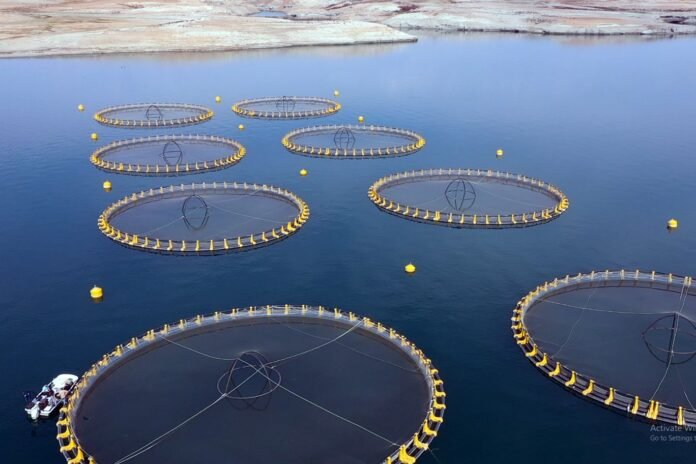
In Kurdistan Region, fish farmers are using dangerous and banned chemicals, sparking urgent warnings from health and environmental experts. Oversight remains weak, and awareness among fish pond owners is shockingly low.
During a televised program, a pond owner from Taq Taq admitted that he uses medicines without guidance. “There is no awareness,” he said. “Everyone decides treatment on their own.” He also criticized the government for offering little support and failing to provide stable electricity.
Veterinarian Omed Idris voiced strong concerns about the situation. “Every pond owner thinks they know everything,” he said. Idris warned that chemicals like formalin, a toxic substance, are being used frequently. This compound, which stays inside the fish, endangers both fish and consumers.
Idris added that excessive use of formalin pollutes water sources. “It’s dangerous for people and the environment,” he said.
Shukri Omar, a major fishery director in Duhok, called the use of formalin “a crime.” He stressed that its use is banned and illegal. Bestoon Najmadin, from the agriculture ministry, confirmed that importing the substance is also prohibited. He promised that enforcement will increase across the provinces.
Yet, some fish farmers claim formalin is still easy to get. One owner boldly said, “I can buy it from a doctor in Erbil right now.”
Currently, over 5,000 licensed ponds supply about 65 percent of the Kurdistan Region’s fish demand. These ponds cover more than 14,000 dunams of land.
Najmadin suggested the government’s Runaki project, which aims to provide 24-hour electricity by 2026, could help boost fish production. More electricity would allow better farming methods and increase output.
Disagreements remain about the best fish to farm. In Duhok, carp is the most common species. Some experts believe tilapia could be useful. Others argue that it harms local species and disrupts the ecosystem.
Idris warned against using tilapia, calling it invasive and unsuitable for the local climate. He also recommended switching from traditional mud ponds to plastic ones, which use less water and control disease more effectively.
Plastic ponds cost around $1,500 but can produce up to three tons of fish in less than half a year. Still, concerns exist about possible contamination from plastics or heavy metals. Omar, however, believes plastic ponds, if well maintained, are safer and more efficient.
The future of Kurdistan’s fish industry depends on stronger regulation, safer practices, and smarter farming methods.